
Roofing has a language of its own, and even experienced roofers will know that roofing terms can vary depending on site habits, drawings, or specifications.
This article starts with relatively simple roofing terms and gets progressively more technical as you work your way through in an attempt to appeal to a broad range of readers.
If you ever want to clarify roofing terms or talk through a specification, our team is always happy to help. A clear understanding at the start usually saves time, cost, and headaches later.
We also provide a free roof take-off service should you have a set of plans and want to know the quantities for the build.
Without further ado, let’s begin!
Slate & Half
Does what it says on the tin. This is a slate, that is 1 and a half times the width of the main sized slate used on your project. For example, if you are using a 400×200, then the slate & half will be 400×300, if you are using a 500×250, then the slate & half will be 500×375, etc. The purpose of the slate & half is to provide broken bond patterns across the roof. British standards dictate that the minimum slate width needed to provide a watertight covering, is 150mm, so rather than provide “half” slates that would achieve the same broken bond, they are supplied as slate & half, surpassing the minimum width requirement.
Gauge
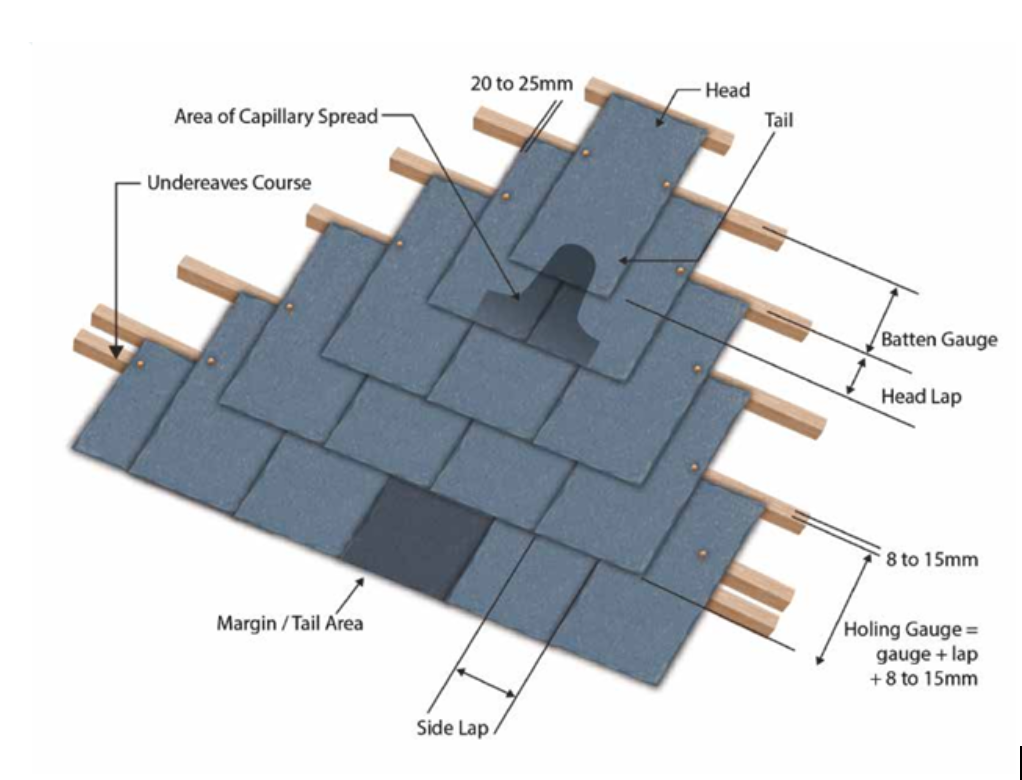
The vertical distance between courses of slate, calculated from slate length and required headlap. Incorrect gauging is a common cause of premature failure, particularly in exposed locations.
Headlap
The overlap between a slate and the slate two courses below. Headlap requirements are dependent on roof pitch, geographical location and exposure severity. Insufficient headlap compromises wind and rain resistance – Please see the diagram below for visual representation.
Side Lap
The horizontal overlap between adjacent slates. While less discussed than headlap, inadequate side lap can lead to wind-driven rain penetration, especially on lower pitches – Please see the diagram below for visual representation.
Fixing Specification
The type, length, and number of fixings used per slate. This is influenced by slate thickness, roof pitch, exposure zone, and fixing method (nail-fixed, hook-fixed, or hybrid). Incorrect fixings are a major cause of slate movement and nail fatigue. ISS can on request provide a fixing specification for our customers.
Exposure Zone
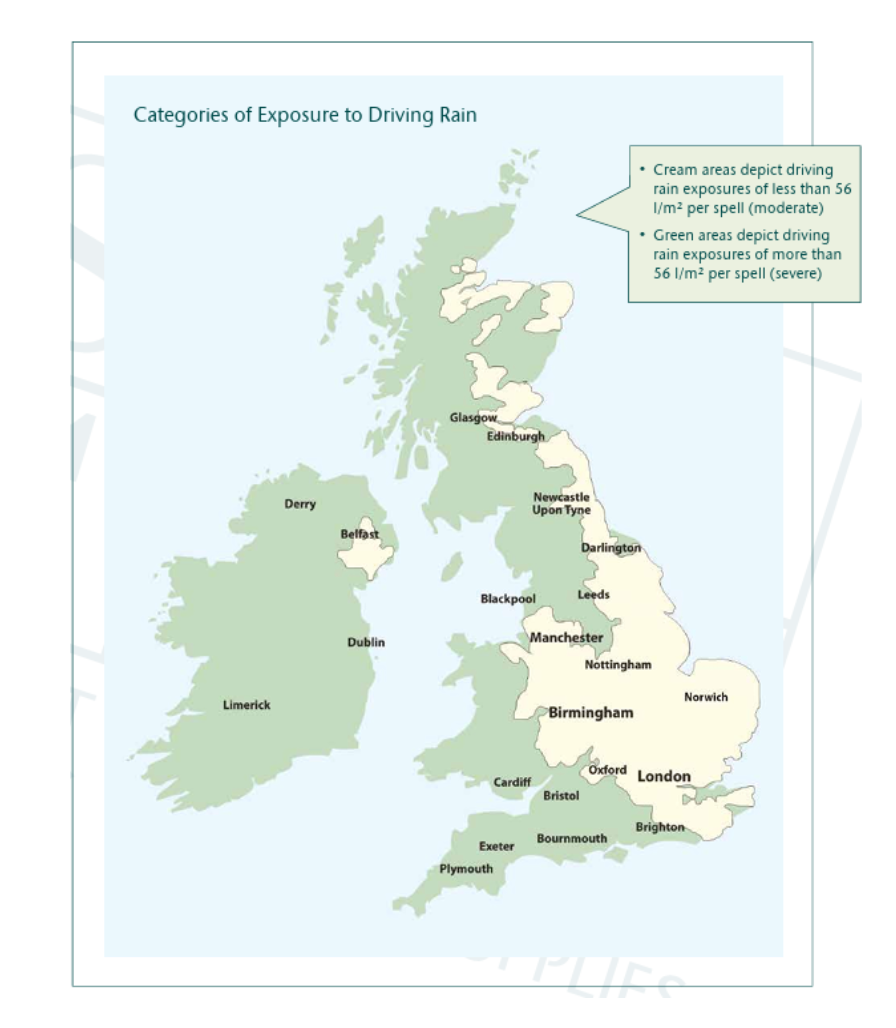
A classification based on wind speed, altitude, and location. Exposure directly affects slate size, headlap, fixing method, and underlay specification.
Valley Construction
Valleys handle the highest concentration of water on a roof. Detailing, material choice, and width must reflect roof pitch, catchment area, and expected water flow. Please see below for a typical valley construction. They can be broadly divided up into different valley types.
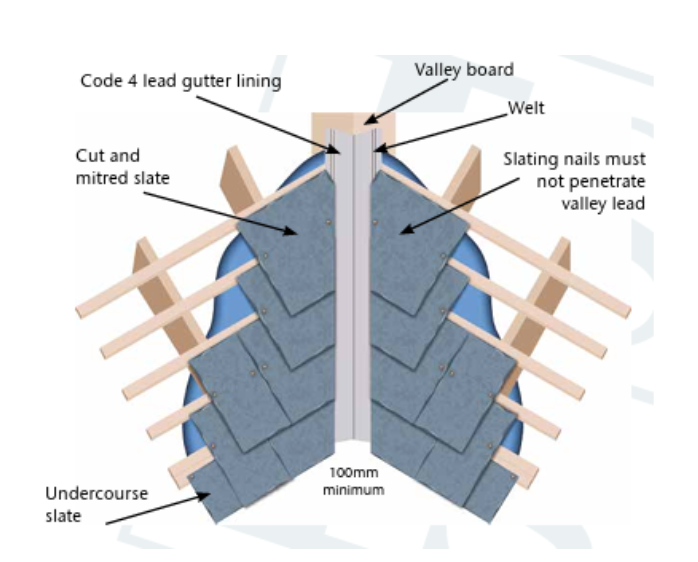
Lead open valley’s
Used for sheltered locations with roofs of 35 degree pitch or more.
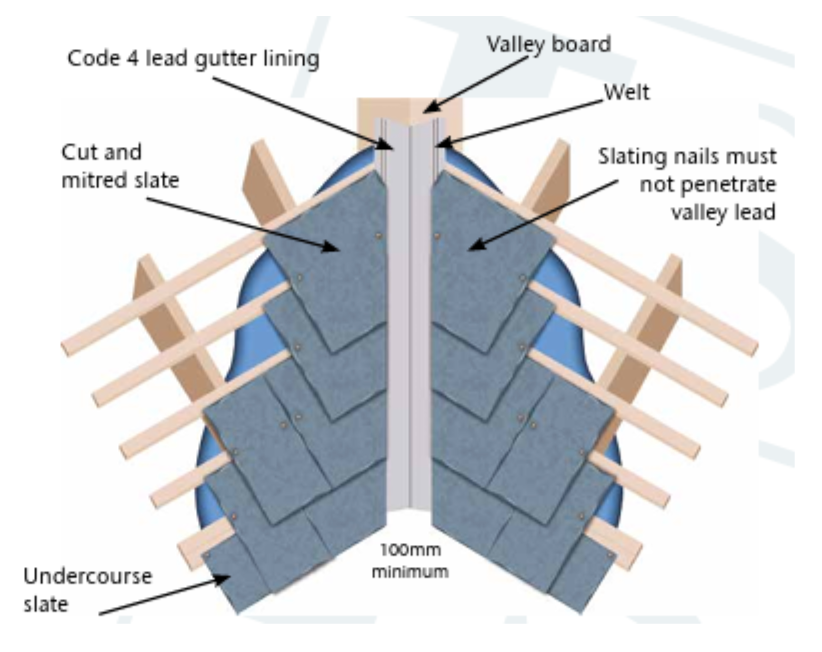
Closed mitred valley’s
Used for more exposed locations, with lower pitches than lead open valleys. Lead valley soakers in the shape of a “butterflies wings”, are interleaved between courses of slate.
Ridge and Hip Detailing
Dry-fixed ridge and hip systems must accommodate movement, ventilation (where required), and long-term weather resistance. Please see below for a typical ridge and hip construction.
Ventilation
Adequate ventilation at eaves, ridge, or high level prevents condensation build-up within the roof structure. Ventilation strategy should always align with insulation type and underlay choice.
If this has wet your appetite for learning, please download our free technical guide, which will provide you with far more information and additional roofing terms.
We’ll be sharing more practical, no-nonsense roofing guidance like this over the coming months so keep an eye on our blog!
Patrick
Independent Slate Supplies
Disclaimer; The contents contained within this article is purely advisory and should be checked by a qualified professional prior to any installation work. Please consult the British Standards for all relevant and up to date information. ISS will accept no responsibility for any loss or damage caused that may arise through reliance being placed on the content of this brochure.